Prop Firms
Content covering proprietary trading firms, including trader funding models, evaluation rules, risk limits, and operating conditions

Best Prop Firms for Traders: Terms and Benefits
Top prop firms of the year: an overview of funding terms, a comparison of programs, and a ranking of firms where traders earn the most.
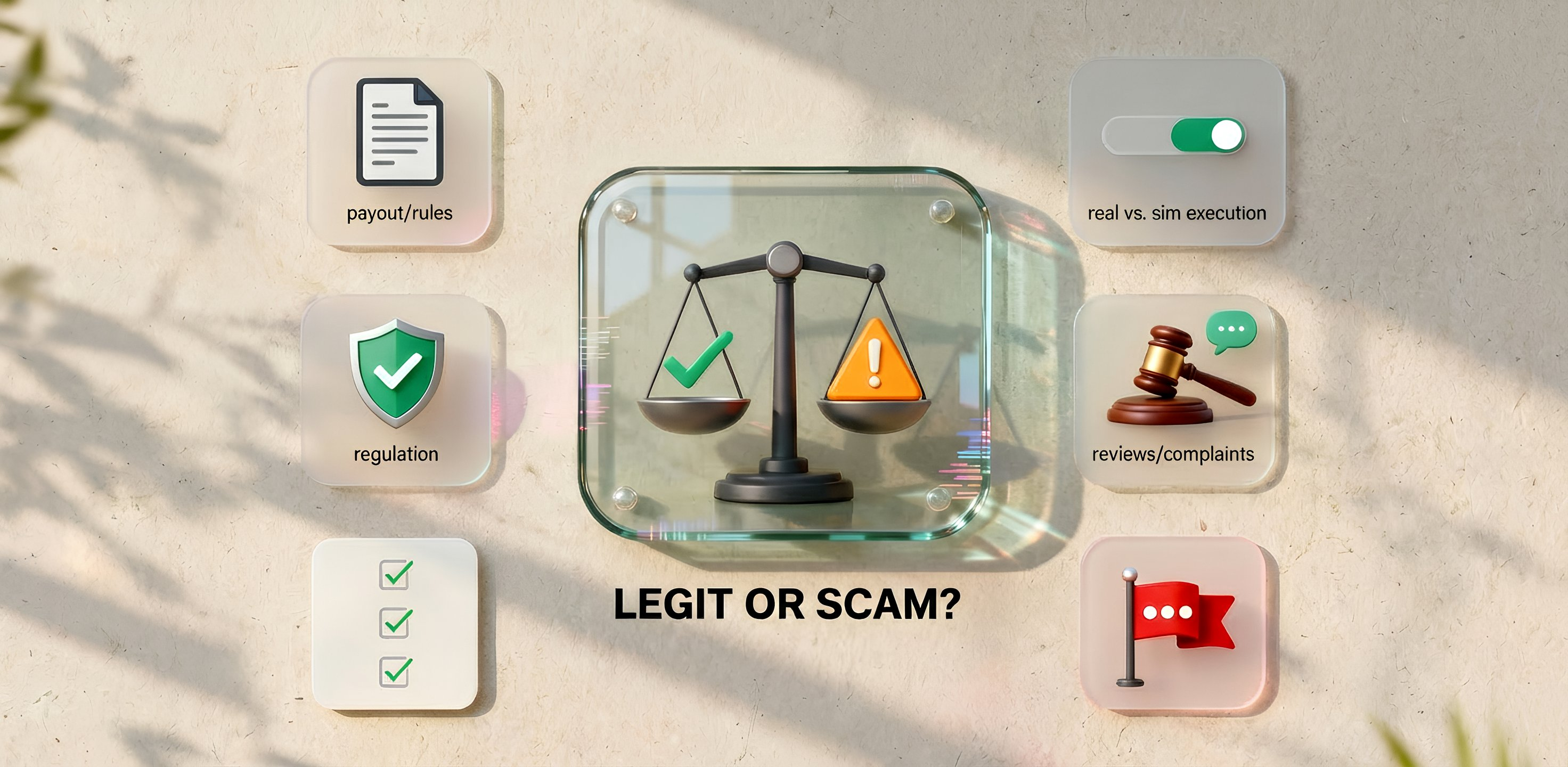
Prop firms — scam, fraud, or a legitimate business?
How to spot a trustworthy prop firm: mechanics, payouts, licensing, and reviews without self-deception.
Prop trading: what prop firms are and how they make money
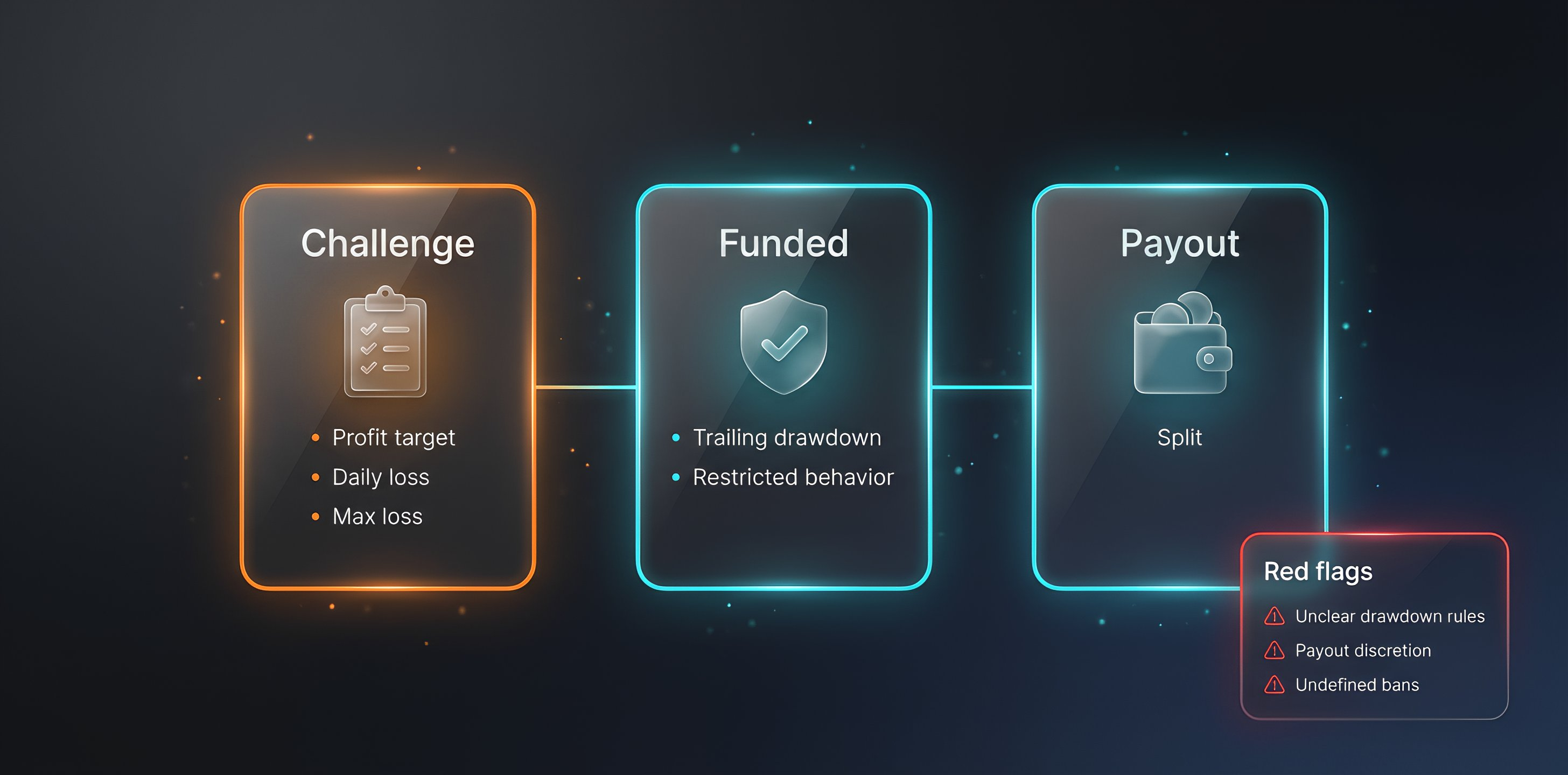
How to read prop program terms: drawdown, prohibited strategies, first payout, and profit split.
What this section covers
This section brings together practical materials about prop firms: how the market works, which conditions matter, what risks are hidden in the details and how to compare products without relying on advertising claims.
- key concepts, terminology and product mechanics
- risk checks before using a platform or protocol
- practical comparisons, warning signs and decision checklists
Evaluating a prop firm challenge before paying
Read the complete challenge and funded-account rules before buying an evaluation, paying particular attention to daily drawdown, maximum loss, news trading, overnight positions, consistency limits, prohibited strategies, and payout eligibility. Track equity using the firm's own calculation method and save records of trades, rule changes, and support conversations.
Useful guides
For a deeper route through this topic, start with Prop trading: what prop firms are and how they make money, Best Prop Firms for Traders: Terms and Benefits, Prop firms — scam, fraud, or a legitimate business?.
Frequently asked questions
How should proprietary trading firms be compared?
Compare the legal operator, fee and refund policy, drawdown model, profit target, time limits, scaling plan, tradable instruments, execution environment, payout split, withdrawal history, and reasons accounts can be denied. A generous notional account size means little when restrictive rules make qualification or payment unlikely.
Does a funded prop account mean I trade the firm's real capital?
Not always. Some firms keep traders in simulated environments and pay rewards based on performance, while others route selected activity to live markets. Check the agreement for the account type, counterparty, data usage, payout obligation, and protections available if the firm changes rules or stops operating.