For a private investor in Germany, tax on cryptocurrency transactions under the private sales regime is usually checked against two conditions: whether 12 months have passed between purchase and disposal, and whether total gains from private sales exceed 1,000 € in the calendar year.
How crypto transactions are taxed in Germany
Cryptocurrency transactions by a private investor in Germany are usually treated as private Veräußerungsgeschäfte (private sales transactions) involving “other assets”: the tax base is calculated when the asset is sold, exchanged for another cryptocurrency or used to pay for goods and services, not when the balance simply rises in price.
In the private sales regime, two dates matter for each disposal: the asset purchase date and the asset disposal date (sale/exchange/payment). These dates are used to check whether the 12-month holding period has passed.
A separate risk is that the Finanzamt may classify crypto activity as commercial activity.
The likelihood of that classification rises with high trading frequency, large turnover, margin trading (trading with borrowed exchange funds, where a position is opened for more than the investor’s own capital) and automation of the trading process. If the activity is treated as commercial, the reliefs of the private sales regime may not apply.
Goal of this guide: to set out the private sales rules for cryptocurrency in Germany, list the transactions treated as disposals, and show how the 12-month holding period and the 1,000 € annual gain threshold are checked.
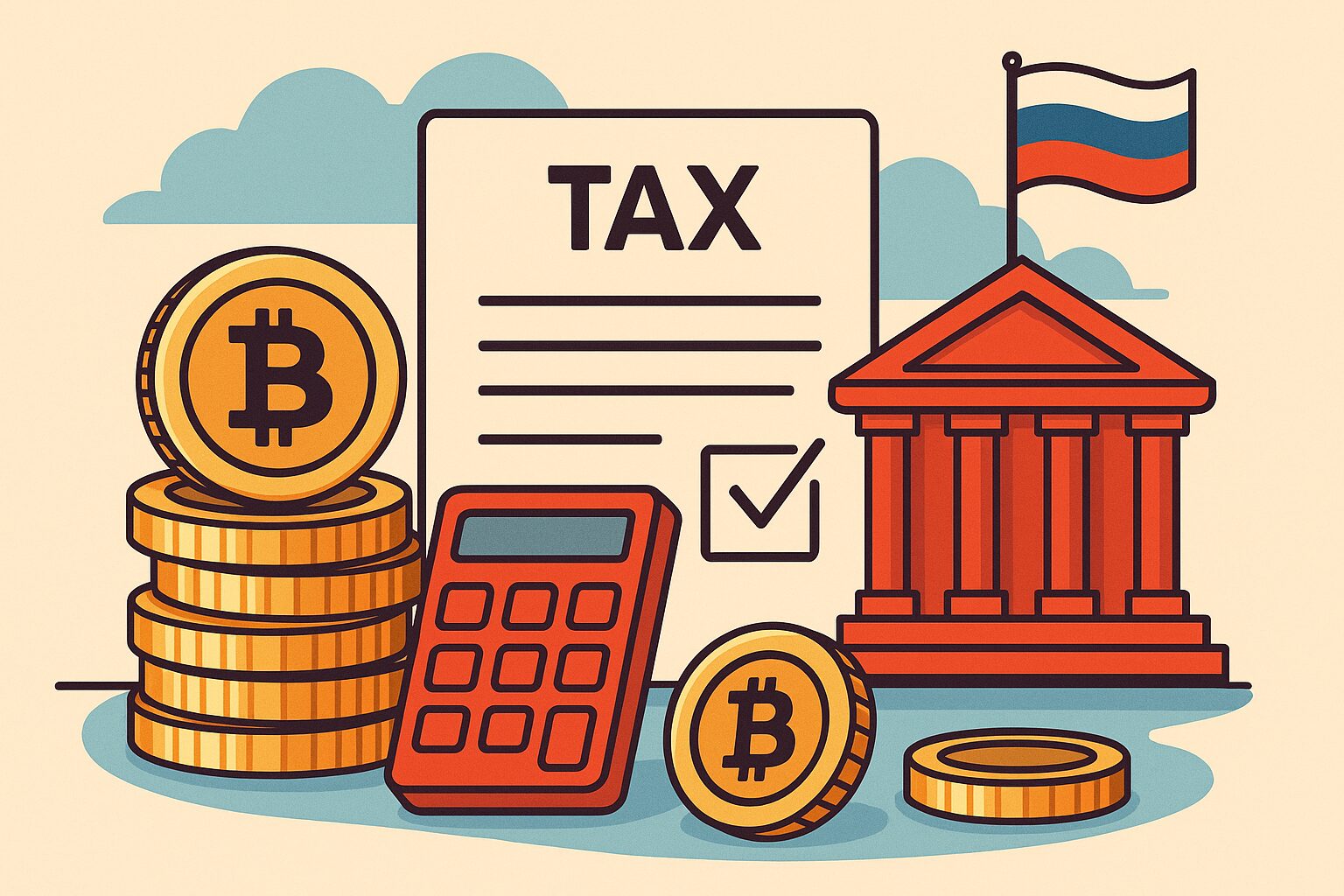
For a private investor in Germany, the same crypto transaction can produce a different tax result depending on how it is classified.
General information on crypto taxation: what investors need to know
The private sales rules for cryptocurrency in Germany define when a taxable event arises, when a gain is exempt after 12 months of holding, and how the 1,000 € threshold for total private-sale gains in a calendar year applies.
-
Cryptocurrency status as a private sale
- Cryptocurrency transactions are treated as private sales transactions (private Veräußerungsgeschäfte) involving “other assets”.
- Gains are not taxed at a fixed 25% rate like dividends or interest.
- A tax base arises only when the asset is disposed of: sold, exchanged or used for payment.
- Holding cryptocurrency without a disposal does not create a taxable event.
-
Checking the 12-month holding period
- If more than 12 months have passed between purchase and sale, the gain is usually tax-exempt.
- The period is counted from the day after purchase until the sale date.
- The rule also applies to tokens that were used in staking or certain DeFi arrangements.
-
Checking the 1,000 € threshold for private sales
- Sales and exchanges before the end of the 12-month period fall under income tax.
- If total gains from all private sales in the year do not exceed 1,000 €, no tax is charged.
- If the threshold is exceeded by even 1 €, tax is calculated on the entire gain amount.
-
Calculating the result and accounting for losses
- The result of a transaction is calculated as the difference between the sale price and the purchase price, including fees.
- Gains and losses from private sales are aggregated for the calendar year.
- Losses may be offset only against gains from other private sales.
- They cannot reduce tax on salary, interest or staking income.
Records for private sales in a calendar year are usually kept as a transaction journal with dates, euro values and fees. A cryptocurrency card payment is often treated for tax purposes as a cryptocurrency disposal, because it involves conversion into fiat by the provider; see the review of crypto cards.
For a private investor in Germany, crypto tax is most often determined by two checks: exemption after 12 months of holding and the 1,000 € threshold for total gains from private sales in the calendar year.
The fact that funds are withdrawn in euros does not determine the taxable event: under the private sales regime, what matters is that cryptocurrency is transferred to another party and consideration is received — fiat, another cryptocurrency, a good, a service or debt settlement.
Which crypto transactions count as a sale for tax purposes
For private sales, the tax calculation is tied to the moment the asset is disposed of and requires recording its value in euros on the transaction date.
Crypto transactions that count as sales for tax purposes:
- Selling cryptocurrency for fiat. Exchanging coins for euros or another fiat currency through an exchange, broker or service creates a taxable event.
- Exchanging one cryptocurrency for another. Exchanging BTC for ETH or any other crypto-to-crypto swap is treated as a disposal of the original asset and requires calculating the result in euros.
- Paying for goods and services with cryptocurrency. A crypto payment is treated as a disposal of the coins at their value at the time of payment.
- Using crypto cards. Paying with a card linked to a crypto balance usually involves conversion of coins into fiat by the provider and is treated as a cryptocurrency disposal.
- Repaying debts with cryptocurrency. Transferring coins to a creditor instead of money is treated as a disposal of the asset.
- Settling obligations in cryptocurrency. Using cryptocurrency to close an obligation to another party instead of making a cash payment is treated as a disposal of the asset.
Do not create a taxable event under the private sales regime: transfers between your own wallets without a change of owner, internal movements between exchanges without a change of owner, and holding cryptocurrency without selling, exchanging or spending it.
Transfers of cryptocurrency between your own wallets without a change of owner do not create a taxable event. Transactions in which the asset is transferred to another party are treated as disposals.
Mining, staking, NFTs and a change of residence add a second calculation point: a tax base may arise when tokens are received and again when they are later sold.
Special cases: mining, staking, NFTs and relocation
In reward and NFT scenarios, the calculation is split into two events: receiving tokens as income at their euro value on the receipt date, and later selling those tokens as a disposal under the private sales rules, with the 12-month period and 1,000 € threshold checked.
For these scenarios, the transaction journal records two entries for each asset: the receipt date and euro value on that date, then the sale date and euro value on the sale date.
⛏️ Mining, staking and DeFi
Tokens received as rewards from mining, staking, lending and DeFi are usually treated in Germany as other income at market value in euros on the date received.
- When rewards are received, the other income category applies with an annual threshold of 256 €.
- The value of received tokens is recorded in euros on the receipt date.
- A separate calculation under the private sales rules applies when those tokens are later sold.
- For the sale of rewards by a private investor, the 12 months of holding and the 1,000 € threshold for total gains from private sales are checked.
A discussion of DeFi risks and practice is in the article “DeFi Security: Threat Map and Case Studies” .
The tax calculation for rewards includes two separate events: income is recorded when the tokens are received, while the gain or loss on their sale is calculated separately under the private sales rules.
🖼️ NFTs and gaming tokens
For a private investor, NFTs and gaming tokens are usually treated as private sales transactions under § 23 EStG.
- A sale after 12-month of holding is usually tax-exempt.
- Short-term gains on NFTs count toward the 1,000 € threshold for total gains from private sales in the calendar year.
- Serial creation and regular sale of NFTs increase the risk of commercial classification.
Infrequent NFT sales usually remain within the private sales regime, while regular issuance and sales increase the risk of commercial classification.
🌍 Relocation and tax residence
After becoming a German tax resident, Germany taxes worldwide income, including cryptocurrency transactions.
- For the 12-month test, the date of the original purchase of the assets matters.
- Price appreciation without a sale does not create a tax base under the private sales rules.
- After a change of residence, the rules for future sales are determined by the rules of the new country of residence.
When residence changes, the critical data in the transaction journal are purchase dates, income receipt dates (if there are rewards) and sale dates.
For correct calculation, separate records are used: a journal of received rewards with date and euro value on receipt, and a sales journal with disposal date, euro value and fees.
In reward and NFT scenarios, a tax base may arise both when tokens are received and when they are later sold, so the calculation is built around two different events.
In Germany, tax on crypto gains depends on how you invest: with direct ownership of cryptocurrency, gains are taxed through Einkommensteuer, while crypto exposure through brokerage products is taxed under the same rules as securities.
Tax rates and filing: how crypto tax is calculated
If gains from private sales are taxable, they are added to total taxable income and taxed under the Einkommensteuer scale; these amounts are usually reported in the annual tax return.
If a crypto sale is taxable (for example, a sale before 12 months of holding when total private-sale gains for the year exceed 1,000 €), the gain is included in total taxable income. Germany has no separate “crypto rate”: the Einkommensteuer scale applies.
✅ What reduces tax under Einkommensteuer
- Progressive Einkommensteuer scale: the rate depends on total annual income.
- Grundfreibetrag: while total annual income does not exceed the basic tax-free allowance, no Einkommensteuer is charged.
- Offsetting losses within private sales: losses from short-term private sales reduce gains from other private sales.
⚠️ What increases tax and requirements
- Gains from private sales increase the total tax base and are taxed at the marginal Einkommensteuer rate.
- A solidarity surcharge and, where applicable, church tax may be added to Einkommensteuer.
- Losses from private sales cannot be offset against salary, interest or staking income.
- Exchange-traded products at a broker (ETP, ETN) are often taxed as capital income with 25% withholding, without the exemption after 12 months of holding.
- With direct ownership of cryptocurrency, the investor usually calculates the gain independently and reports it in the tax return.
Taxable gains are usually reported in the annual tax return; private sales are often reported in Anlage SO as “other income” (Sonstige Einkünfte), with gains and losses stated.
When investing in cryptocurrency through exchange-traded products at a broker (ETP, ETN and similar instruments), those instruments are usually treated as securities. Gains are taxed as capital income: the broker withholds 25% tax at source, to which the solidarity surcharge and, where applicable, church tax may be added.
The exemption after 12 months of holding that applies to private cryptocurrency sales does not apply in this regime. For capital income, the Sparer-Pauschbetrag — the tax-free allowance for such income — may apply.
With direct ownership of cryptocurrency, taxable gains from private sales are included in Einkommensteuer through total income; when investing through ETP/ETN products at a broker, taxation often shifts into the capital income regime.
The private sales tax calculation is built on three pieces of data: purchase date, disposal date and euro value on both dates, including fees.
Step-by-step procedure for calculating and declaring tax
For private sales, the calculation process comes down to checking the holding period, converting gains into euros and checking the 1,000 € annual threshold for total gains.
-
Collect and prepare the transaction history for the calendar year
- Purchases, sales and crypto-to-crypto exchanges.
- Payments for goods and services with cryptocurrency.
- Transfers between your own wallets without a change of owner.
- Recording dates, amounts, euro rates and fees for each transaction.
-
Separate disposals by holding period
- Determine the purchase date and disposal date for each transaction.
- Separate disposals before 12 months from disposals after 12 months.
- Exclude long-term sales from the taxable gain calculation.
-
Calculate the result on short-term disposals
- Convert the asset value into euros on the purchase date and the disposal date.
- Include exchange and network fees when calculating the result.
- Determine the gain or loss on each short-term sale.
-
Aggregate gains and losses for the year
- Add up the results of all short-term private sales.
- Calculate the final total gain from private sales for the calendar year.
-
Check the 1,000 € threshold
- If total gains do not exceed 1,000 €, no private-sales tax is charged.
- If total gains exceed 1,000 €, tax is calculated on the entire gain amount.
-
Report taxable gains in the tax return
- State gains and losses from private sales in Anlage SO.
- Attach calculations and the final total gain for the year.
-
Keep source data and the calculation method
- Exchange exports and your own calculation spreadsheets.
- Sources of euro exchange rates on transaction dates.
- Description of the matching method used for purchases and sales (for example, FIFO).
With high trading frequency, large turnover, margin trading and automation of the trading process, the Finanzamt may classify the activity as commercial. In that case, the 12-month exemption and the 1,000 € private-sales threshold may not apply.
The private sales calculation relies on verifiable date and euro-value data and ends with checking the holding period and the 1,000 € threshold for the calendar year.
Without a transaction journal, it is impossible to prove the holding period and the euro value on purchase and disposal dates, so the private sales calculation becomes unverifiable for the Finanzamt.
How to keep records of cryptocurrency transactions
A transaction journal is needed for two checks: (1) whether 12 months passed between purchase and disposal; (2) what gain or loss resulted in euros after fees.
Minimum data set for each transaction:
- Date and time. Needed to check the 12 months between purchase and disposal.
- Asset and amount. Ticker and quantity (BTC, ETH and so on).
- Value at the time of the transaction. Price in euros, or euro conversion using the selected rate source on the transaction date.
- Fees. Exchange fees, network fees and other costs that reduce the transaction gain.
- Transaction type. Purchase, sale, exchange, payment, transfer between your own wallets (marked as no change of owner).
- Platform and network. Exchange/service, wallet and blockchain, so exports and on-chain data can be matched.
Choose and document a method for matching sales to purchases (for example, FIFO — “the oldest coins are sold first”) and apply it consistently to all calculations for the year.
To verify calculations, the Finanzamt usually asks for exchange exports (CSV), your own calculation spreadsheets and euro rate sources for transaction dates. A single final gain figure without the source data is usually not enough.
A transaction journal with dates, euro values and fees makes the private sales calculation reproducible and suitable for Finanzamt review.
Most crypto tax return mistakes arise from missing date and euro-rate data, and from omitting transactions that count as disposals even without a withdrawal to euros.
Common mistakes by private crypto investors
Understanding the most common mistakes helps avoid problems when calculating and declaring crypto tax.
Typical mistakes by private crypto investors when calculating and declaring taxes in Germany:
- No transaction journal. Exchange app history without exports and your own spreadsheet does not prove dates and prices if the Finanzamt asks.
- Mixing sales before and after 12 months. The mistake leads to overpayment or underpayment if the exemption after 12 months is applied to a transaction that does not qualify.
- Believing that tax arises only when euros are withdrawn. Crypto-to-crypto exchanges and payments with cryptocurrency are disposals and require calculating the result in euros.
- Ignoring the risk of commercial classification. Large turnover, margin trading and high regularity increase the risk that transactions will be reclassified as commercial activity.
- No method for matching purchases and sales. Without a fixed method (for example, FIFO), it is easy to miscalculate the holding period and gain for a specific disposal.
- Mixing reward income with sale gains. Mining/staking/DeFi rewards are recognized as income on the receipt date, while sale of those tokens is treated separately as a disposal.
A typical source of mistakes is the absence of verifiable data on dates, euro prices and the method for matching purchases and sales.
Undeclared taxable crypto gains in Germany are treated as Steuerhinterziehung and can lead to additional assessments, interest and penalties.
Can you “cheat” the state when using cryptocurrency?
Concealing taxable crypto gains from the Finanzamt is tax evasion (Steuerhinterziehung), not a separate “crypto regime”.
Legal optimization in this area means acting within the rules: selling after 12 months of holding, monitoring the 1,000 € threshold for total gains from private sales and offsetting losses within the private sales category. Concealing income means omitting taxable disposals from the tax return and falls under Steuerhinterziehung.
Why “crypto anonymity” does not remove the audit trail:
- KYC/AML at exchanges and brokers. Accounts and transactions on centralized platforms are tied to identity; see the Bitget review.
- Banking infrastructure for fiat transactions. Euro deposits and withdrawals go through banks and leave a banking transaction history.
- Public blockchain data. On-chain data allows chains of transfers to be built and addresses to be matched with exchange and service transactions.
- Finanzamt requests. During a review, the Finanzamt usually requires calculations, confirmation of euro rates on transaction dates and data sources.
- Large expenses with low declared income. A mismatch between expenses and official income requires explanations about the source of funds.
Practical takeaway: the manageable approach is to plan sales around the 12 months holding period and monitor the 1,000 € threshold for total private-sale gains, instead of hiding taxable transactions.
Concealing taxable cryptocurrency gains in Germany leads to legal consequences and usually cannot be reduced to “saving tax”.
An adviser is needed when the mix of crypto transactions and income sources increases the risk of classification and calculation errors under Finanzamt rules.
When it makes sense to speak with a tax adviser
A tax adviser helps in situations where a single mistake in classifying a transaction or calculating its euro value can lead to additional assessments and lengthy correspondence with the Finanzamt.
- Large portfolio and high disposal volumes.
- it is important to allocate disposals across calendar years if this affects the 1,000 € threshold check and the final Einkommensteuer rate;
- a transaction journal and a purchase-sale matching method must be prepared in a format that can be presented to the Finanzamt.
- Active trading and complex instruments.
- margin trading, derivatives and high trading frequency increase the number of disposals and make gain calculations with fees more complex;
- the risk of commercial classification (Gewerbe) rises based on the overall signs of activity.
- Income from mining, staking, nodes, NFTs and own projects.
- income on the receipt date and gain on sale are calculated as different events and require separate records;
- an error in the income category leads to an incorrect tax base and a dispute over the return;
- when DeFi tools are used (for example, liquidity pools), the number of transactions that must be classified and valued in euros increases.
- Moving to or from Germany.
- purchase dates of assets and disposal dates after the change of residence matter;
- you need to understand which country treats you as tax resident on the disposal date and under which rules future sales are taxed.
- A request from the Finanzamt or doubts about returns already filed.
- to respond to the Finanzamt, calculations, a transaction journal, euro rates on transaction dates and a description of the matching method are usually required;
- amendments to returns and explanations of private-sales calculations may be needed.
A tax adviser with crypto experience usually helps with two tasks: (1) building a transaction journal and calculation method that can be presented to the Finanzamt; (2) separating the private sales regime from scenarios where the Finanzamt may classify the activity as commercial.
When working with cryptocurrency, tax advisers usually use exchange exports (CSV), reconcile calculations with euro-rate sources on transaction dates and describe the purchase-sale matching method in a form accepted by the Finanzamt.
Advice is justified when the price of a mistake is additional assessments, penalties and a dispute over commercial classification of transactions.
Questions about crypto tax most often arise around everyday operations — holding, exchanges, payments and holding periods.
Crypto Tax FAQ in Germany
Short answers on holding without selling, the 12-month period, the 1,000 € threshold, crypto-to-crypto exchanges, crypto payments and taxation of rewards.
Is holding cryptocurrency without selling taxable?
After how long can cryptocurrency be sold tax-free?
Do I have to pay tax if the gain from selling cryptocurrency is below 1,000 euros?
Is exchanging cryptocurrency or paying for purchases with crypto taxable?
Do I have to pay tax on mining and staking income?
How do you declare crypto tax in Germany?
Can you avoid declaring crypto gains if you exchange them for cash?
The FAQ covers three checks for a private investor: what counts as a disposal, how the 12-month holding period is calculated, and how the 1,000 € threshold for total annual gains is checked.
At the end, the separate rules need to be tied into one picture so it is clear which data and decisions determine the practical tax result.
Crypto Taxes in Germany: Summary of the Rules
Under the private sales regime, a gain on the sale of cryptocurrency by a private investor is exempt if more than 12 months have passed between purchase and sale. If the sale or exchange took place before 12 months, the 1,000 € threshold for total private-sale gains in the calendar year is checked: if the threshold is exceeded, tax is calculated on the entire gain amount.
If gains from private sales are taxable, they are included in total taxable income and taxed under the Einkommensteuer scale. The final tax amount depends on the total tax base for the year and possible surcharges.
A separate risk is commercial classification by the Finanzamt. High trading regularity, large turnover, margin trading and automation of the trading process increase the likelihood of commercial classification; if the activity is classified as commercial, the reliefs of the private sales regime (including the 12-month exemption and the 1,000 € threshold) may not apply.
For the private sales regime, verifiable data is required for each disposal: purchase date, disposal date, euro value on both dates and fees. These data points are used to check the
The crypto tax calculation in Germany for a private investor rests on a transaction journal and on the 12 months and 1,000 € checks under the private sales regime.